F-1 visa job restrictions

The F-1 visa comes with strict employment rules that many international students don’t fully grasp until they accidentally violate them. For students from India, these restrictions affect when you can work, where you can work and what types of jobs you can accept while pursuing your degree. Breaking these rules can terminate your visa status, force you to leave the U.S. and create permanent problems with future visa applications. Knowing exactly what’s allowed and what’s prohibited protects your ability to complete your education and build your career.

Basic employment rules for F-1 students

Your F-1 visa status exists primarily for full-time study, not employment. Work authorization is limited and conditional, designed to support your education rather than serve as your main purpose for being in the U.S.

On-campus employment without special authorization

F-1 students can work on campus without additional approval beyond your visa. This is the most accessible employment option, especially during your first year.

On-campus work rules:

  • Work up to 20 hours per week during fall and spring semesters
  • Work full time (more than 20 hours per week) during official breaks and summer vacation
  • Must be enrolled full time to remain eligible
  • Includes jobs in university libraries, dining halls, bookstores, recreation centers, administrative offices and research labs
  • Also includes work for commercial businesses operating on campus like cafeterias or campus bookstores

Payment comes through the university’s payroll system even if you work for a contractor or an outside business operating on campus. This work helps you adjust to American workplace expectations, provides income for expenses and builds your resume with U.S. employment references.

International students often start with on-campus positions during their first semester while they’re still adjusting to life in the U.S. The work environment is familiar, supervisors understand international student situations and hours are flexible around class schedules.

Off-campus work requires specific authorization

You cannot work off campus without authorization from either your school for curricular practical training (CPT) or from U.S. Citizenship and Immigration Services (USCIS) for optional practical training (OPT). This is one of the most commonly violated rules, often because students don’t understand the restriction or think occasional work won’t be noticed.

Prohibited off-campus work includes:

  • Employment with any company or organization not affiliated with your university
  • Freelance work or independent contracting
  • Starting your own business
  • Any work-for-pay arrangements with individuals or companies
  • Remote work for companies based outside the U.S. (this is a gray area but generally prohibited while you’re physically in the U.S.)

Even volunteering in positions that would typically be paid can create problems if immigration officials determine you’re displacing paid workers or receiving benefits in exchange for labor. True volunteer work for charitable organizations is generally acceptable, but be cautious about arrangements that look like unpaid employment.

Work authorization types available to F-1 students

F-1 students have several pathways to legal off-campus employment, each with specific requirements and timelines.

Available authorization types:

  • CPT: For internships or jobs that are part of your academic curriculum. Requires completing one academic year and school approval. Understanding CPT rules for F-1 visa helps you use this option effectively.
  • OPT: Provides 12 months of work authorization after degree completion (36 months for STEM OPT majors). Requires USCIS approval with two to four month processing time.
  • Severe economic hardship: Emergency authorization if you face unexpected financial difficulties due to circumstances beyond your control. Rarely granted and requires extensive documentation.

Each type of work has distinct rules about when you can work, for whom and what reporting requirements exist. Never assume work is authorized. Always verify with your designated school official (DSO) before accepting any position.
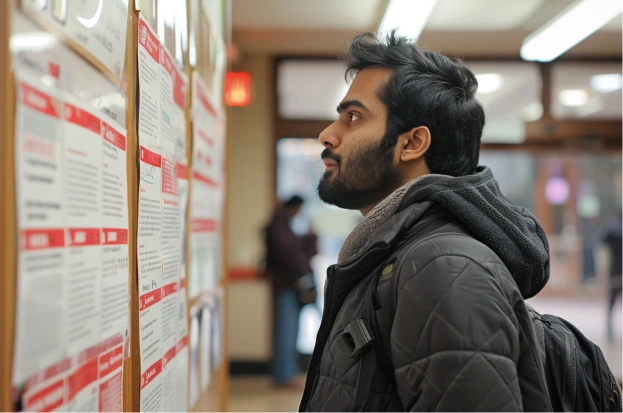

Indian F-1 student standing at a university campus job board, looking at posted on-campus job opportunities.

Experience financial empowerment

Get the financial information you need to take charge of your future

Common violations and their consequences

Some F-1 students inadvertently violate work restrictions because they don’t understand the rules or underestimate how seriously immigration authorities treat violations.

Working without authorization

Working without authorization is the most serious F-1 visa job restriction and includes starting work before receiving proper authorization, continuing work after authorization expires or working for employers not listed on your authorization documents.

Examples of unauthorized work:

  • Starting a CPT internship before your updated I-20 arrives showing approval
  • Working off campus during your first year without any authorization
  • Continuing to work after your OPT expires while waiting for H-1B approval
  • Accepting freelance projects or side gigs without proper work authorization

The consequences are severe. Unauthorized employment terminates your F-1 status immediately. You lose eligibility for OPT, must leave the U.S. and face difficulties with future visa applications. Even brief periods of unauthorized work (a few days or weeks) will create permanent immigration records that could affect you for years.

Immigration officials discover unauthorized work through various means: tax records, Social Security Administration data, background checks for status changes or tips from others. Don’t assume occasional or short-term work will go unnoticed.

Exceeding authorized work hours

Working more hours than your authorization allows also violates F-1 visa job restrictions. This typically happens when students work on campus more than 20 hours during the semester or work more than authorized part-time CPT hours.

Common hour violations:

  • Working 25 or 30 hours per week on campus during fall or spring semester when limit is 20
  • Employer asking you to work extra hours during busy periods without adjusting your authorization
  • Working for multiple employers simultaneously when combined hours exceed limits

Track your hours carefully and communicate with employers about your restrictions. If your on-campus supervisor wants you to work 25 hours during a busy week, explain you’re limited to 20 hours during the semester. Most supervisors understand once you explain the visa restrictions.

Working in positions unrelated to your field of study

CPT and OPT require work to relate directly to your major. Taking jobs outside your field violates your authorization even if you have permission to work.

Examples of mismatched employment:

  • Computer science student working retail or food service on CPT
  • Business administration graduate working as a personal assistant during OPT when the role doesn’t involve business functions
  • Engineering student doing administrative work unrelated to engineering

There’s some flexibility in interpretation. A computer science student could work in IT support, software development, data analysis or technical consulting. But working as a restaurant server or retail clerk wouldn’t qualify even with CPT authorization.

If you’re unsure whether a position relates to your field, discuss with your DSO before accepting. They can help determine if the connection is sufficient or if the work would violate your authorization.

Tax and reporting violations

F-1 students must file U.S. tax returns even if you don’t owe taxes. Failing to file or incorrectly reporting income creates problems that affect your status.

Tax-related issues:

  • Not filing tax returns for years when you earned income
  • Failing to report on-campus employment
  • Incorrectly claiming yourself as a resident for tax purposes when you’re a nonresident alien
  • Not obtaining a social security card for F-1 students when required for employment

Tax violations may not immediately terminate your F-1 status, but they create complications when you apply for OPT, status changes or future visas. Immigration officials review tax compliance as part of various applications. Address tax obligations properly from your first year to avoid future problems.

Staying compliant withF-1 visa job restrictionswhile maximizing opportunities

Understanding restrictions doesn’t mean you can’t gain valuable work experience. It means you need to work within the system strategically.

Plan your work authorization timeline

Map out when you’ll be eligible for different types of employment and plan accordingly.

Strategic timeline for two-year master’s program:

  • First semester: On-campus work only (up to 20 hours per week)
  • First summer: CPT for internship if you completed one academic year
  • Second year: Continue on-campus work or part-time CPT if available and approved
  • Second summer: Full-time CPT for internship
  • After graduation: OPT for 12 to 36 months depending on degree

This timeline lets you gain progressive experience without violations. Each stage builds on previous work, and you’re always operating within authorized parameters.

Document everything

Keep copies of all work authorization documents, offer letters, pay stubs and correspondence with your DSO about employment.

Important documentation to maintain:

  • All versions of your I-20 showing CPT or OPT authorization
  • Job offer letters specifying position, hours and dates
  • Email confirmations from your DSO approving employment
  • Pay stubs showing hours worked and payment received
  • Tax returns and W-2 forms from all employers

If questions arise about your employment history during future applications, documentation proves you followed rules correctly. Without documentation, you may struggle to demonstrate compliance years later when applying for H-1B visas or other immigration benefits.

Communicate with employers about restrictions

Many U.S. employers aren’t familiar with F-1 visa restrictions. Explain your limitations clearly when accepting positions.

Key points to communicate:

  • Your specific work authorization dates and any restrictions on hours
  • Your need to report employment changes to your school
  • Requirements like E-Verify participation for STEM OPT employers
  • That you cannot start work even one day before authorization begins

Most employers appreciate clear communication about visa rules. It prevents misunderstandings that could jeopardize both your status and their compliance with employment laws. This becomes particularly relevant if you’ve prepared well with tips for F-1 visa interviews and understand U.S. visa interview questions and answers about your study and work plans.

Close-up of important visa and employment documents arranged on a desk

MPOWER Financing: Focus on education, not emergency employment

F-1 visa restrictions exist to ensure students prioritize education over employment. But these rules create real challenges when students face financial pressure. You’re limited in how much you can earn through authorized channels, yet you still need to cover living expenses, send money to family in India or handle unexpected costs.

This financial pressure leads some students into risky decisions. Taking unauthorized work seems like the only option when you’re facing a tuition deadline, rent payment or family emergency. But a single violation can end your education and career prospects in the U.S., making the short-term financial solution far more costly long-term.

Adequate funding prevents risky decisions

When your education costs are properly funded from the start, you’re not forced into situations where unauthorized work seems necessary. MPOWER provides loans up to US$100,000 without requiring cosigners or collateral, covering tuition, fees, health insurance and living expenses in the U.S.

This comprehensive funding means:

  • You’re not scrambling for rent money mid-semester when on-campus jobs don’t pay enough.
  • Unexpected expenses (medical costs, family emergencies, travel needs) don’t create crises requiring immediate income.
  • You can focus on academics and authorized employment like internships rather than desperately seeking any income source.
  • Family in India aren’t under constant pressure to send additional funds when initial planning underestimated costs.

Students working within F-1 visa restrictions succeed when they have adequate resources to support themselves through authorized means alone.

Strategic career development instead of survival employment

With proper financing, your work choices become strategic career decisions rather than financial necessities. You can:

  • Wait for internships that provide meaningful experience rather than accepting any available position
  • Focus on coursework and skill development during semesters without needing maximum on-campus hours
  • Pursue unpaid research opportunities that build your academic profile without worrying about lost income
  • Network and attend professional events instead of working every available hour

Students in India with strong academic credentials but limited collateral options sometimes arrive underfunded and spend their entire U.S. experience working maximum authorized hours just to survive. They complete degrees but miss opportunities for deeper learning, relationship building and career development that their better-funded peers access. Adequate financing lets you take full advantage of your education investment.

MPOWER Financing student loan

A loan based on your future earnings

FAQs


Can I work remotely for a company in India while studying in the U.S. on an F-1 visa?

While you’re physically in the U.S. on F-1 status, your primary purpose is study, not employment. Working remotely for companies abroad while in the U.S. typically violates your status. Additionally, any work performed while physically in the U.S. may require U.S. work authorization regardless of who pays you. Consult an immigration attorney before pursuing this arrangement.

What happens if I accidentally work one or two hours over my authorized limit during a week?

A single minor violation probably won’t result in status termination if it’s truly accidental and doesn’t become a pattern. However, you should stop immediately, document that it was unintentional and discuss with your DSO if you’re concerned. Repeated or substantial violations (regularly working 25-30 hours when authorized for 20) are much more serious.

Can I do unpaid internships without CPT authorization?

Even unpaid work that relates to your field typically requires CPT authorization because it’s practical training related to your degree. True volunteer work for charitable organizations usually doesn’t require authorization, but “unpaid internships” at for-profit companies typically do. Check with your DSO before accepting any unpaid position.

Am I allowed to invest in stocks or cryptocurrency while on an F-1 visa?

Passive investment income from stocks, cryptocurrency, real estate (outside the U.S.) or bank accounts doesn’t violate F-1 status. You’re restricted from active employment for pay, not from investment activities. However, day trading that resembles a full-time occupation could potentially create issues. Consult a tax professional about reporting requirements for investment income.

Can I start a YouTube channel or blog and earn advertising revenue on F-1 status?

Online content creation is a gray area of F-1 visa job restrictions. Passive income from content you create is different from active employment. However, if you’re regularly creating content as a business activity, immigration officials might view this as unauthorized self-employment. Many students maintain blogs or channels without monetization to avoid complications. Consult an immigration attorney if you want to monetize content creation activities.

What if my employer asks me to work off the books to avoid visa complications?

Off-the-books employment is illegal for both you and the employer. It doesn’t avoid visa complications; it creates them. You’re still working without authorization (a violation), and you’re also evading taxes (another violation). This creates multiple legal problems that can affect your immigration status and criminal record.

Can I volunteer for political campaigns or causes while on an F-1 visa?

F-1 students can volunteer for nonprofit organizations and causes as long as this is genuine volunteer work, not a paid position disguised as volunteering. However, be cautious about political activities. While volunteering is generally acceptable, you cannot work for political campaigns in paid positions, and you should avoid activities that might be interpreted as political employment.

If I violate my F-1 work restrictions, will I definitely be deported?

Violations can have serious consequences. Your status terminates, you lose eligibility for benefits like OPT, you must leave the U.S. and future visa applications will likely be denied. Discovery may not be immediate but often occurs during status changes, OPT applications or when you apply for other visas. The severity of consequences depends on the nature and extent of violations.

How do immigration officials discover unauthorized work?
Immigration officials can research your work via multiple sources: tax records and Social Security Administration data, background checks for status changes or visa applications, employer verification during investigations, tips from others or random audits. Don’t assume brief or occasional work will go unnoticed. Immigration databases are comprehensive and violations from years ago can surface during future applications.

DISCLAIMER – Subject to credit approval, loans are made by Bank of Lake Mills or MPOWER Financing, PBC. Bank of Lake Mills does not have an ownership interest in MPOWER Financing. Neither MPOWER Financing nor Bank of Lake Mills is affiliated with the school you attended or are attending. Bank of Lake Mills is Member FDIC. None of the information contained in this website constitutes a recommendation, solicitation or offer by MPOWER Financing or its affiliates to buy or sell any securities or other financial instruments or other assets or provide any investment advice or service.

2026 © MPOWER Financing, Public Benefit Corporation NMLS ID #1233542

U.S. office India office
1101 Connecticut Ave. NW Suite 900, Washington, DC 20036 The Cube at Karle Town Center, 9th Floor, 100 Ft, Nada Prabhu Kempe Gowda Main Road, Next to Nagavara, Bengaluru, Karnataka 560045, India
Apply Now