Work permits for international students: Demystifying F-1 work authorization

The F-1 system doesn’t use “work permits” the way Bangladesh or many other countries do. Instead, it offers multiple categories of work authorization, each with different rules, timing, application processes and strategic implications. Some require explicit approval, others are automatic with valid F-1 status. Some limit you to campus, others allow off-campus work. Some you can use immediately upon arrival, others only after completing academic requirements. Understanding this categorized system rather than searching for a generic “work permit” helps you maximize legitimate earning opportunities while protecting your visa status. This knowledge separates students who successfully fund living expenses and build careers from those who either miss opportunities or inadvertently violate regulations.

Why "work permit" is the wrong term for F-1 students

The language you use reveals whether you understand the system. “Work permit” implies a single authorization document. F-1 work authorization doesn’t work that way.

The F-1 work authorization framework

F-1 status grants various types of work authorization depending on:

  • Where you work (on campus versus off campus)
  • Why you’re working (economic necessity versus training)
  • When during your program (during studies versus after completion)
  • What your field is (STEM versus non-STEM affects duration)

Categories that exist:

Authorization type

Campus/Off campus

When available

Approval needed

On-campus employment

Campus only

Anytime during valid F-1

No special approval

Curricular practical training (CPT)

Off campus

After one year (usually)

Yes, from designated school official (DS)

Optional practical training (OPT)

Off campus

After program completion

Yes, from U.S. Citizenship and Immigration Services (USCIS)

STEM OPT extension

Off campus

After initial OPT

Yes, from USCIS

Economic hardship employment

Off campus

During studies

Yes, from USCIS

Why this matters:

When you ask your international office, “How do I get a work permit?” they need to clarify what you actually mean. Are you asking about on-campus jobs? Summer internships? Postgraduation employment? Each has a different process.

What your I-20 and Employment Authorization Document (EAD) actually are

Your I-20 is not a work permit:

The I-20 is your certificate of eligibility for F-1 status. However, certain work authorizations require endorsed I-20s:

  • CPT: Requires I-20 with a specific CPT authorization page showing employer, dates and location
  • OPT: Requires an I-20 recommendation for OPT, but the actual work authorization comes from USCIS issuing an EAD.

EAD cards: For OPT (pre- or post-completion) and for STEM OPT, USCIS issues an EAD card. CPT never uses an EAD.

Common confusion: Many students think they need an EAD for any work. False. On-campus employment and CPT never involve EAD cards. Understanding when you need which document prevents unnecessary applications and anxiety.
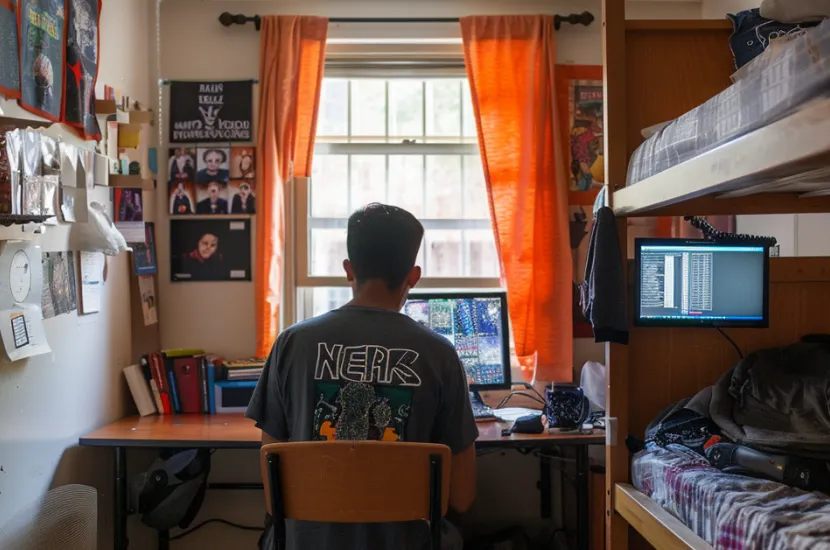

Bangladeshi student sits at his desk studying in his dorm room

Experience financial empowerment

Get the financial information you need to take charge of your future

On-campus employment: The most misunderstood authorization

Many Bangladeshi students don’t realize they can work on campus immediately, without any special application process.

Automatic authorization with valid F-1 status

The rule:

As long as you maintain valid F-1 status and full-time enrollment, you’re automatically authorized to work on campus:

  • Up to 20 hours per week during fall and spring semesters
  • Full-time during breaks and summer
  • No additional approval needed from USCIS or your DSO

What qualifies as “on campus”:

Clearly on campus:

  • University dining services
  • Campus libraries and labs
  • Student centers and recreational facilities
  • Residence halls
  • Campus bookstores operated by the university

Sometimes on campus:

  • Commercial businesses located physically on campus (Starbucks, etc.) if they provide direct student services
  • Off-campus locations if they’re educationally affiliated with the university

Never on-campus:

  • Businesses near campus but not on university property
  • Companies operating in the same city
  • Remote work for external companies, even if you’re physically sitting on campus

Learn more about broader student visa work restrictions to understand the boundaries.

Finding and securing on-campus positions

Where to look:

Most universities maintain online job boards specifically for student employment. These integrate with payroll systems that verify your eligibility.

Application process:

  1. Search your university’s student employment portal.
  2. Apply directly through the system or to department contacts.
  3. Attend interviews like any job search.
  4. Accept the offer if selected.
  5. Complete I-9 employment eligibility verification with your I-20 and passport.

Timeline:

You can begin searching and interviewing immediately upon arrival. However, you cannot start working until your program start date on your I-20, even if you arrive early.

Strategic use of on-campus work

Beyond just earning money:

Build U.S. work experience: Even if pay is modest, on-campus work provides:

  • First U.S. resume entry demonstrating U.S. workplace familiarity
  • Professional references from U.S. supervisors
  • Practice with workplace English and cultural norms
  • Network connections that sometimes lead to research opportunities or recommendations

Supplement other funding:

If you have student loans for postgraduate degrees to cover tuition, on-campus employment earnings can reduce borrowing needs for living expenses or provide discretionary income for travel and activities.

Field-relevant positions when possible:

Working in labs, research centers or departments related to your major provides more valuable resume material than general dining services, though any employment is better than none if that’s what’s available.

CPT: Training during your program

We’ve covered CPT extensively elsewhere, but understanding how it fits into the broader work authorization landscape matters. Review detailed information about CPT for international students for comprehensive coverage.

Key points for the authorization sequence

CPT’s position:

  • Typically available after completing one academic year
  • Requires explicit DSO approval via updated I-20
  • Must be integral to curriculum (usually requires course enrollment)
  • Counts against OPT eligibility if you complete 12+ months full time

Strategic timing:

Most students use CPT for:

  • Summer internships between academic years
  • Part-time positions during fall/spring semesters
  • Thesis or capstone project-related work

Common mistake:

Students sometimes assume CPT is the only way to gain professional experience. You can do research assistantships, volunteer in your field or work on personal projects without CPT authorization. CPT may be paid or unpaid, but if it’s off-campus training integral to your curriculum, you must have CPT authorization on your I-20 before you start.

OPT: Post-completion work authorization

Optional practical training represents most international students’ primary path to postgraduation employment.

The OPT framework

Standard OPT:

  • 12 months of full-time work authorization after degree completion
  • Available to all F-1 students who complete degrees
  • Must be in field related to your major
  • Requires USCIS approval and EAD card

STEM OPT extension:

  • Additional 24 months (total 36 months) for STEM degree holders
  • Requires employer to be an E-Verify participant
  • Involves additional training plan requirements
  • Must apply for extension before initial 12-month OPT ends

Application timing:

You can apply for OPT:

  • As early as 90 days before program completion
  • No later than 60 days after program completion

Processing typically takes three to five months, and you cannot work until you receive your EAD card.

Explore opportunities through OPT jobs for international students resources.

OPT unemployment rules

Critical limitations many students don’t know:

Standard OPT:

  • Maximum 90 days of unemployment during 12-month period
  • Days accumulate; three separate months totals 90 days
  • Exceeding 90 days terminates work authorization

STEM OPT:

  • Maximum 150 days of unemployment during 24-month extension
  • Same accumulation rules
  • Must report employment start/end dates to DSO within 10 days

Strategic implication:

Don’t quit jobs during OPT without having the next position secured. Those unemployment days accumulate faster than you think, especially if job searching takes longer than expected. Consider broader job search tips for postgraduate international students before making employment transitions.

Economic hardship employment

Few students know about this work authorization category because it’s rarely used and difficult to qualify for.

When it applies

Severe economic hardship employment:

If you experience “unforeseen circumstances” causing severe economic hardship, you can apply to USCIS for off-campus work authorization during your studies.

Qualifying circumstances:

  • Loss of on-campus employment through no fault of your own
  • Substantial fluctuations in currency exchange rates affecting your funding
  • Large unexpected expenses (medical bills, family emergencies)
  • Loss of financial support from funding source

What doesn’t qualify:

  • Regular living expenses you could have anticipated
  • Wanting extra spending money
  • Preferring off-campus work to on-campus options

Application process:

Requires DSO recommendation and USCIS application with substantial documentation proving hardship. Processing takes several months, making this impractical for truly urgent situations.

Maintaining status: The most important consideration

All work authorization depends on maintaining valid F-1 status. Violations can end all work rights immediately.

Status requirements while working

Regardless of which work authorization you use:

  • Maintain full-time enrollment (except during approved breaks)
  • Make normal progress toward degree
  • Keep passport and I-20 current
  • Report address changes within 10 days
  • Don’t exceed authorized work hours or duration

Working without authorization:

Even one day of unauthorized work violates F-1 status. Consequences include:

  • Immediate termination of F-1 status
  • Ineligibility for future immigration benefits
  • Potential deportation
  • Barred from returning to the U.S.

Common violations to avoid:

  • Starting CPT before receiving authorized I-20
  • Working more than 20 hours during semester at on-campus job
  • Continuing to work on OPT after 90 days unemployment
  • Taking freelance work without proper authorization
  • Working for a company not listed on CPT authorization
A Bangladeshi professional shakes hands with an HR manager in a modern office lobby on their first day of work

MPOWER Financing: Reducing reliance on work authorization

MPOWER Financing provides funding that reduces pressure to maximize work hours at the expense of academic or strategic career planning.

Comprehensive education funding

Covering costs directly: MPOWER loans can cover both tuition and living expenses in the U.S., making it unnecessary to work extensively during studies. This allows you to:

  • Focus on academics first and reduce financial stress
  • Choose work opportunities strategically for career benefits rather than maximum pay
  • Avoid unauthorized work temptations when money gets tight

Strategic career building: When basic expenses are covered, you can pursue career-building opportunities like research assistantships or lower-paid internships at prestigious companies rather than only considering highest-paying positions.

Supporting informed decisions

MPOWER helps students understand work authorization categories and make compliant choices. Access to accurate guidance prevents costly mistakes from misunderstanding complex regulations.

MPOWER Financing student loan

A loan based on your future earnings

FAQs


Do I need to apply for permission to work on campus?

On-campus work is automatically authorized with valid F-1 status. You just need to find a job and complete normal hiring paperwork with your I-20 and passport for I-9 verification.

Can I work remotely for a company in Bangladesh while on F-1?

If you’re physically in the U.S., working remotely for any employer (domestic or foreign) requires proper work authorization. Consult your international student office before accepting such arrangements. Review proof of financial support for international students requirements to understand how employment affects your status.

What happens to my work authorization if I transfer universities?

CPT authorizations end when you leave a school. You’d need new CPT authorization from your new school. On-campus employment obviously ends. OPT continues unaffected by school transfers since its post-completion authorization is tied to your degree, not current enrollment.

Can I volunteer or intern unpaid without work authorization?

True volunteering for charitable/humanitarian organizations is generally permitted. However, “unpaid internships” that resemble employment require work authorization. The distinction is whether you’re displacing paid workers. When in doubt, consult your DSO.

How long does it take to get work authorization approved?
On-campus work needs no approval. CPT typically takes five to 10 business days through your DSO. OPT takes three to five months through USCIS. Plan accordingly and never start working before authorization is in hand. Understanding budgeting for college students helps you manage finances during authorization waiting periods.

DISCLAIMER – Subject to credit approval, loans are made by Bank of Lake Mills or MPOWER Financing, PBC. Bank of Lake Mills does not have an ownership interest in MPOWER Financing. Neither MPOWER Financing nor Bank of Lake Mills is affiliated with the school you attended or are attending. Bank of Lake Mills is Member FDIC. None of the information contained in this website constitutes a recommendation, solicitation or offer by MPOWER Financing or its affiliates to buy or sell any securities or other financial instruments or other assets or provide any investment advice or service.

2026 © MPOWER Financing, Public Benefit Corporation NMLS ID #1233542

U.S. office India office
1101 Connecticut Ave. NW Suite 900, Washington, DC 20036 The Cube at Karle Town Center, 9th Floor, 100 Ft, Nada Prabhu Kempe Gowda Main Road, Next to Nagavara, Bengaluru, Karnataka 560045, India
Apply Now