How to open an international student bank account

Opening a U.S. bank account is one of the most important steps you’ll take as a student. It gives you a secure way to store and access money, avoid high foreign transaction fees and manage your academic and personal expenses with confidence. A well-chosen international student bank account allows you to pay for housing, books, food and transportation more easily while building healthy financial habits.

Whether you’re arriving for your first semester or planning a multi-year degree, this article will help you understand how to navigate international student banking, choose the right bank and stay organized during your time in the U.S.

Why you need an international student bank account

As an international postgraduate student, you’ll have many financial obligations while studying overseas: tuition payments, rent, grocery bills and possibly income from an on-campus job. Relying on a debit card or account from your home country can quickly become expensive due to exchange rates, ATM fees and international transfer charges. By setting up a U.S. bank account early, you’ll gain more control over your spending, protect your funds and access services that are easier to use locally.

A U.S. checking account allows you to:

  • Pay rent or utilities by direct transfer or check
  • Set up recurring payments or subscriptions
  • Receive direct deposits from on-campus jobs or refund disbursements
  • Withdraw cash from domestic ATMs without international fees
  • Use digital tools like mobile apps, contactless payment and online transfers

Many students also open a linked savings account to set aside emergency funds or plan for large expenses like travel, laptops or health insurance costs. Over time, a good banking relationship can also support access to international student credit cards, which help build a credit history in the U.S.

Two international students review a printed bank brochure while seated on a campus bench

Experience financial empowerment

Get the financial information you need to take charge of your future

Choosing the right international student bank

There’s no one best option for all students. Large banks, regional banks and credit unions all offer different benefits, and your choice should reflect your priorities. Most students look for convenience, affordability and flexibility.

Here’s how to evaluate banks for international students:

  • Account fees: Look for student accounts with no monthly maintenance fees, no minimum balance and low or no ATM fees. Some banks waive fees while you’re enrolled full time.
  • ATM access: Check for ATMs on or near campus so you’re not charged for out-of-network withdrawals.
  • Online features: Most U.S. banks offer mobile apps with budgeting tools, bill pay and real-time account alerts. Prioritize banks with user-friendly interfaces and strong security.
  • Customer support: If you’re not fluent in English, consider banks with multilingual staff or helplines.
  • Document requirements: Some banks allow you to open an account without a Social Security number, which is helpful if you haven’t yet received one through work or opening a bank account as an international student.

Local credit unions may also offer attractive options, especially if your university has a partnership with one. Some schools even host bank representatives during orientation to help you open an account during your first week.

What documents you’ll need

Most banks will ask for multiple forms of identification and proof of your student status. Gather your documents ahead of time to avoid delays or repeated visits.

Required documents typically include:

  • A valid passport
  • Your F-1 or J-1 visa
  • A copy of your I-20 (or DS-2019 for J1 visa holders)
  • Proof of enrollment at your university (a student ID card or class schedule may be accepted)
  • Proof of your U.S. address, such as a lease, utility bill or official school housing letter
  • A Social Security number if you have one, or a denial letter if you’re not eligible

Some banks may ask you to deposit an initial minimum amount, typically US$25 to US$100. This can often be done with cash, a travel card or a money transfer.

If you’re considering applying for a credit card for F-1 students later, choose a bank that also offers student credit-building tools, secured credit cards or overdraft protection plans.

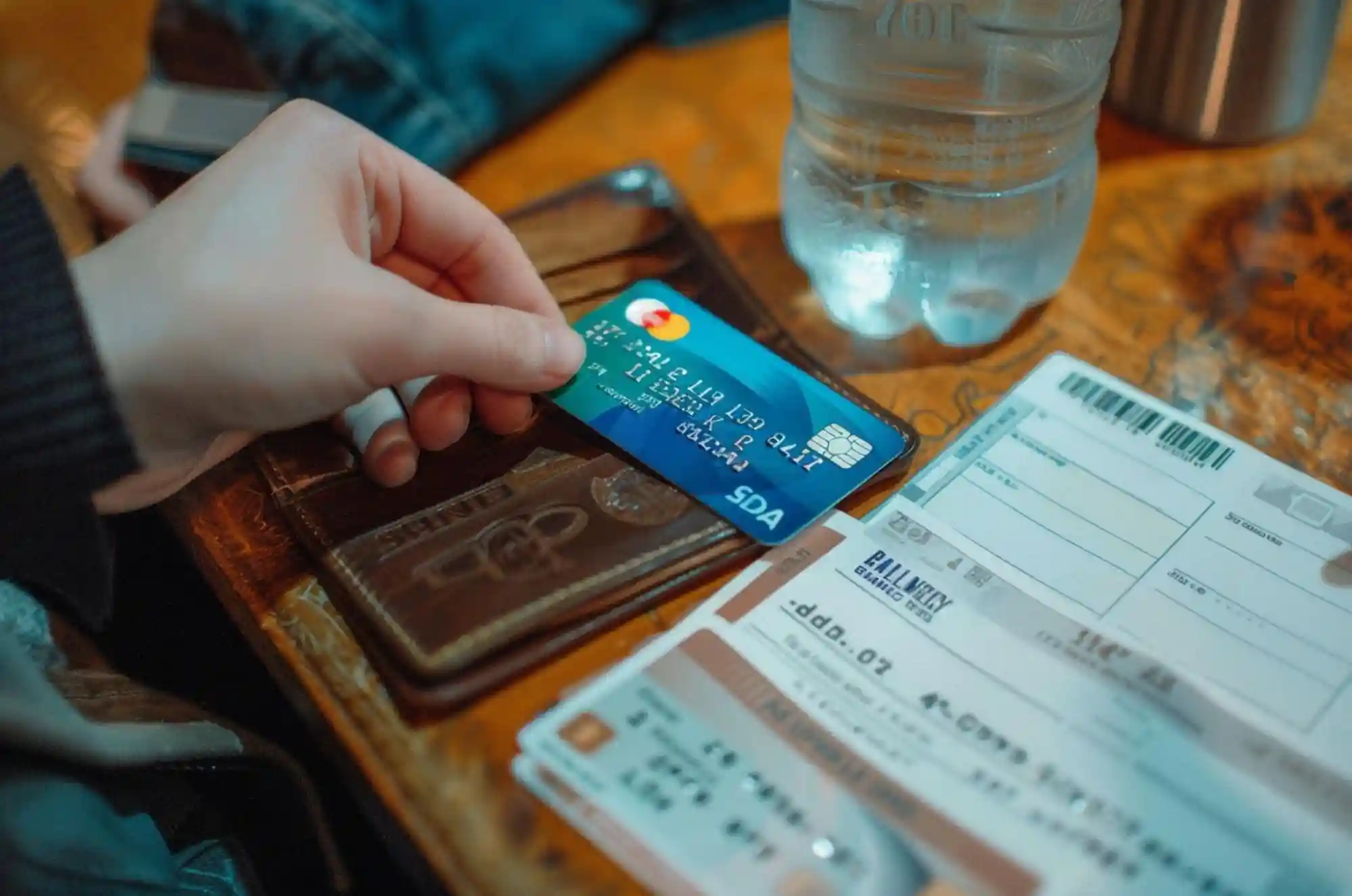
A close-up of a debit card being placed into a wallet next to a student ID card.

MPOWER Financing helps you access the U.S. financial system

Setting up a bank account is just one part of settling into life in the U.S. You’ll also need to understand how tuition is paid, how to verify your enrollment for financial or visa purposes and how to manage your budget over time. MPOWER Financing helps international students take control of their finances through more than just loan funding.

Here’s how MPOWER supports the banking process and your broader financial setup:

  • Loan documents accepted as proof of funds: Some banks require documentation that shows your ability to cover tuition and living costs. MPOWER’s loan disbursement letters meet this need.
  • Direct disbursement to your school: When MPOWER sends funds to your university, it reduces the burden of large personal transfers and ensures smoother registration, freeing you up to manage rent and banking locally.
  • Educational tools and budget guidance: Through Path2Success, MPOWER provides modules on budgeting for college students, credit-building, fraud protection and money management, all designed for international students.
  • Preparation for future financial steps: Many students go on to open U.S. credit cards, rent apartments or apply for jobs. MPOWER helps prepare you for those milestones through both funding and financial literacy.
  • Support without a cosigner: This independence is useful not only for your loan, but also for demonstrating financial responsibility when dealing with U.S. banks or housing providers.

Whether you’re just starting out or already enrolled, MPOWER offers the structure and confidence to build your financial life in the U.S. with less stress and more security.

MPOWER Financing student loan

A loan based on your future earnings

FAQs


Do I need a U.S. bank account to study in the U.S.? 

It’s not required by immigration law, but it’s highly recommended. A bank account simplifies tuition payments, refunds and daily expenses and is essential for managing finances in the U.S.

Can I open a bank account without a Social Security number? 

Yes. Many student-friendly banks allow you to open accounts using your passport, visa, I-20 and proof of address. If you don’t have a Social Security number, you may need a denial letter or ITIN for certain services.

What kind of account should I open? 

A checking account is best for daily use, while a savings account is ideal for long-term or emergency savings. Some banks let you link both accounts to avoid fees or set savings goals.

What are the best banks for international students? 

National banks like Chase, Bank of America and Wells Fargo offer wide ATM networks and online features. Some smaller banks or credit unions near your campus may offer better customer service or lower fees.

Does MPOWER Financing help with banking? 

MPOWER Financing doesn’t help students open bank accounts, but having an approved loan can make it easier to demonstrate financial stability when setting one up. Students can also use MPOWER’s resources to better understand how the U.S. banking and payment systems work.

DISCLAIMER – Subject to credit approval, loans are made by Bank of Lake Mills or MPOWER Financing, PBC. Bank of Lake Mills does not have an ownership interest in MPOWER Financing. Neither MPOWER Financing nor Bank of Lake Mills is affiliated with the school you attended or are attending. Bank of Lake Mills is Member FDIC. None of the information contained in this website constitutes a recommendation, solicitation or offer by MPOWER Financing or its affiliates to buy or sell any securities or other financial instruments or other assets or provide any investment advice or service.

2026 © MPOWER Financing, Public Benefit Corporation NMLS ID #1233542

U.S. office India office
1101 Connecticut Ave. NW Suite 900, Washington, DC 20036 The Cube at Karle Town Center, 9th Floor, 100 Ft, Nada Prabhu Kempe Gowda Main Road, Next to Nagavara, Bengaluru, Karnataka 560045, India
Apply Now